'Rental Family' Finds Authentic Emotion in Tokyo’s Business of Deception
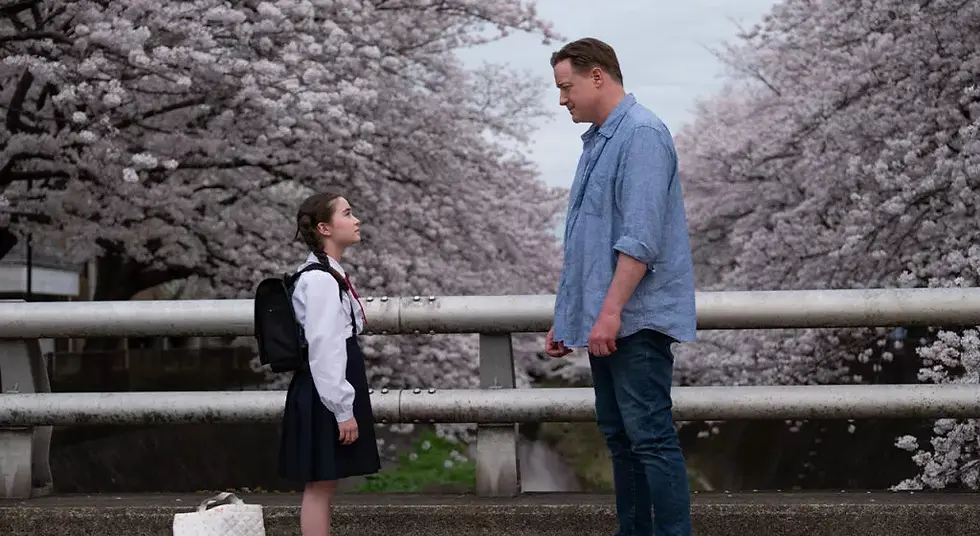
The central concept driving the Tokyo-set dramedy Rental Family—the existence of businesses that hire actors to fulfill essential roles in clients' lives, such as wedding guests or estranged relatives—presents a premise fraught with potential saccharine melodrama. However, under the elegant direction of Hikari, and anchored by a nuanced, melancholic script co-written by Hikari and Stephen Blahut, the film transcends its potentially "cringey" setup. Bolstered by tender and finely tuned performances from an ensemble cast featuring Brendan Fraser, Takehiro Hira, Mari Yamamoto, and Akira Emoto, the resulting feature is a contemplative and beautiful work, enriched by thoughtful messaging and clever narrative twists. The film is undeniably positioned as a strong favorite among current cinematic releases.
Rental Family draws inspiration from real Japanese businesses, like Nihon Kokasei Honbu (Japanese Efficiency Corporation), which facilitate the literal renting of human actors to portray specific relationships for clients. The film casts Brendan Fraser as Phillip Vandarploueg, a middle-aged journeyman actor who arrived in Japan seven years prior for a toothpaste commercial and has since been relegated to a string of low-quality productions, now struggling desperately for work. Unlike Bill Murray's Bob Harris in Lost in Translation, who was navigating the twilight of a successful career, Phillip's visible weariness suggests he has never attained anything beyond a journeyman status.
Phillip’s perpetual grimace, which gives his resting face the appearance of a mournful emoji, speaks volumes about his psychological isolation. Despite becoming fluent in Japanese in an effort to assimilate, the film strongly suggests he remains in Tokyo primarily because there is no emotional connection or motivation drawing him back to America. The audience observes his profound loneliness in several elegiac sequences where he gazes out his apartment window, watching the full, happy lives of residents in the building opposite—a kind of sad-sack homage to the voyeurism of Rear Window.
Breaking from the typical neon-soaked, night-driven Tokyo cinematic aesthetic, Hikari and cinematographer Takurô Ishizaka shoot much of the story in bright daylight. Phillip eventually lands a job with a rental family enterprise managed by the brusque yet efficient Shinji, portrayed by Takehiro Hira, whose strong performance reveals unexpected complexity as the story progresses. Initially, Phillip’s assignments are straightforward and often played for comedic effect, with the underlying deception serving a greater social good—such as playing an older Canadian groom so the bride can save face with her parents, or acting as the token "sad American" at a fake funeral so the "deceased" can gauge how he will be mourned. His coworker, Aiko, played by the striking Mari Yamamoto, frequently takes on more emotionally demanding roles, often hired as a stand-in for married men’s mistresses and subjected to the resulting wrath of the wives.
The story intensifies when Phillip accepts two assignments that raise serious moral questions. In the first, he poses as a journalist writing a magazine feature on a legendary but fading actor, Kikuo (Akira Emoto), who is beginning to suffer from memory loss. While this narrative thread stretches plausibility, it remains deeply emotionally resonant. The second, and more troubling, gig involves Phillip being hired by a single mother (Shino Shinozaki) to impersonate the father of her 11-year-old daughter, Mia (Shannon Gorman), in a desperate effort to increase Mia's chances of admission to a prestigious middle school critical to her future. The mother’s decision, while motivated by love, immediately strikes the audience as deeply questionable parenting.
As Mia's initial and understandable resentment toward this man she believes to be her father begins to soften, the subsequent bonding between them is undeniably sweet and touching. However, the precarity of the arrangement constantly looms. The man encouraging Mia, exchanging text messages with her, and proudly displaying her artwork is fundamentally an actor; his affection, though real, is tethered to a fictional construct. To Hikari's considerable credit, Rental Family confronts the moral difficulty of this situation head-on, acknowledging that Phillip is trapped in an impossible role that could easily lead to cruel and lasting emotional consequences. The film handles this heavy subject matter with sensitivity, expertly weaving in moments of light comedy to relieve the tension.
Ultimately, Rental Family is unabashedly sentimental, evoking the spirit of Frank Capra at times. It offers a thoughtful and insightful examination of the strange and unique business of renting human connection. Moreover, it is a knowing character study of a gaijin (foreigner) in Japan who accepts that he may live there forever without ever fully grasping the culture, yet remains determined to keep trying. As Marlon Brando famously asserted that all humans are actors who constantly lie—either by speaking falsehoods or withholding their true thoughts—Phillip’s central challenge is determining what comes next when the necessary lies must stop, and the unavoidable truth awaits him at every turn.


